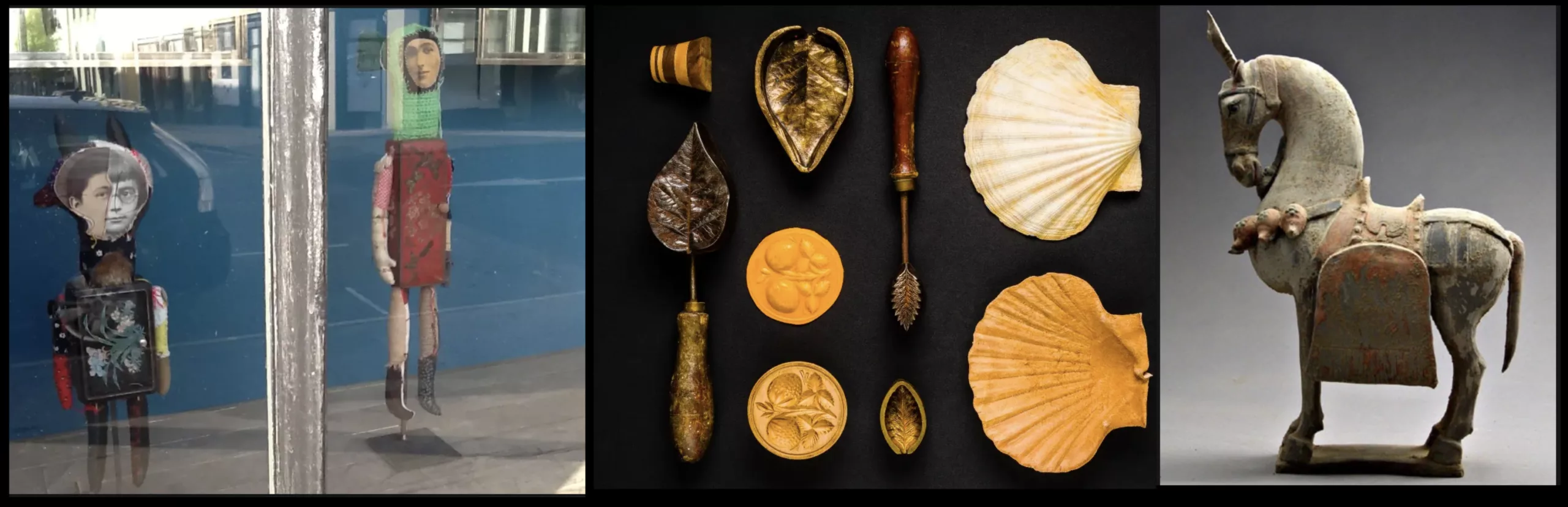
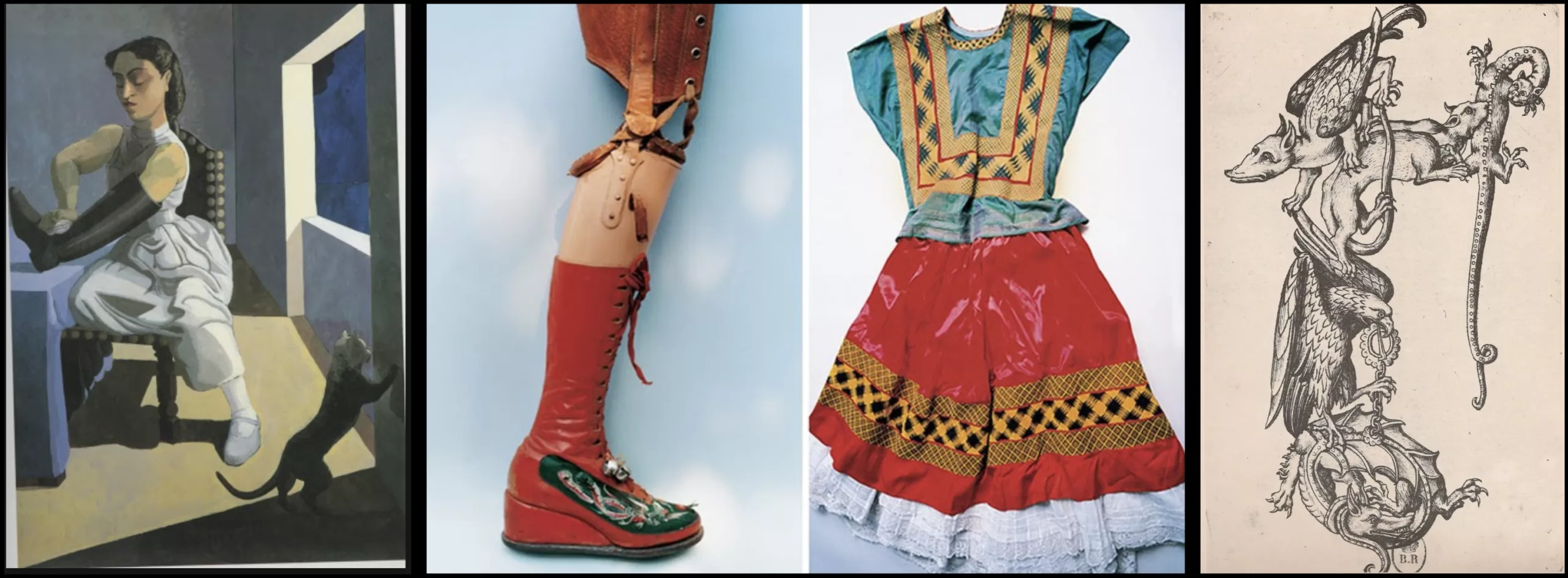
A Shoemaker's Eye for Inspiration
People often assume that, as a shoemaker, I look to fashion for inspiration.
The truth is rather different.
While I appreciate exceptional fashion and design, it is rarely where I instinctively look for ideas.
I find myself far more drawn to folk art, indigenous craft, historic objects, textiles and the work of
makers whose understanding of materials has been passed down through generations.
Whenever I visit a museum, those are invariably the collections I seek out first. I am fascinated
by the things people have made for themselves and for one another. Objects that are useful,
ceremonial, decorative or deeply personal. The materials they chose, the colours they
combined, the way something was stitched, embellished, woven, carved or constructed. Quite
often it is one small detail, rather than the whole object, that stays with me.
Last year I visited the National Museum of the American Indian in New York and found myself
particularly drawn to the clothing, leatherwork and objects within the collection.
What interests me is not the idea of reproducing something I have seen. It is understanding how
another maker has approached their material.
Why was that particular material chosen? How has something been constructed? How have
colour, texture and decoration been brought together? How can an object be both practical and
extraordinarily beautiful? Those are the things I take away with me.
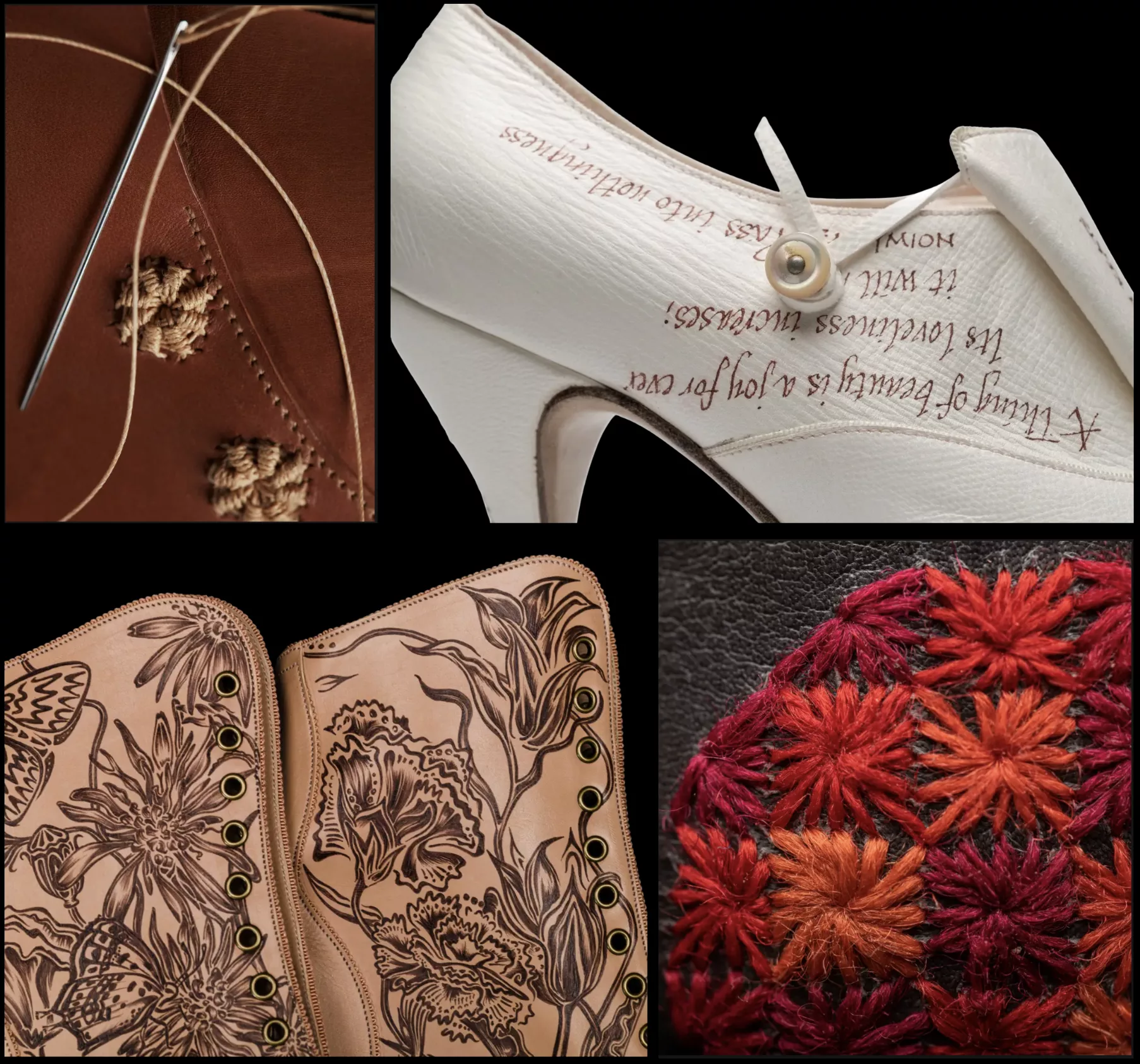
A few years ago I visited Sur les Routes de Samarcande at the Institut du Monde Arabe in
Paris, an exhibition rich in traditional textiles, embroidery, pattern and colour. It is exactly this
kind of craftsmanship that I find myself drawn to.
These traditions may be very different from my own, but looking at how other people work with
materials often makes me reconsider what might be possible within shoemaking.
And Closer to Home...
I don't necessarily need to travel far to find the same feeling.
Places such as Compton Verney and Sudeley Castle give me the opportunity to look at objects
and craftsmanship from completely different periods and disciplines.
I think what matters is taking the time to really look.
Once you understand how things are made, you begin to notice different things. Proportion. The
relationship between materials. An unexpected combination of colours. The evidence of the
maker's hand.
Sometimes I will photograph something without knowing quite why it has caught my attention.
Years later, that detail might suddenly come back to me.
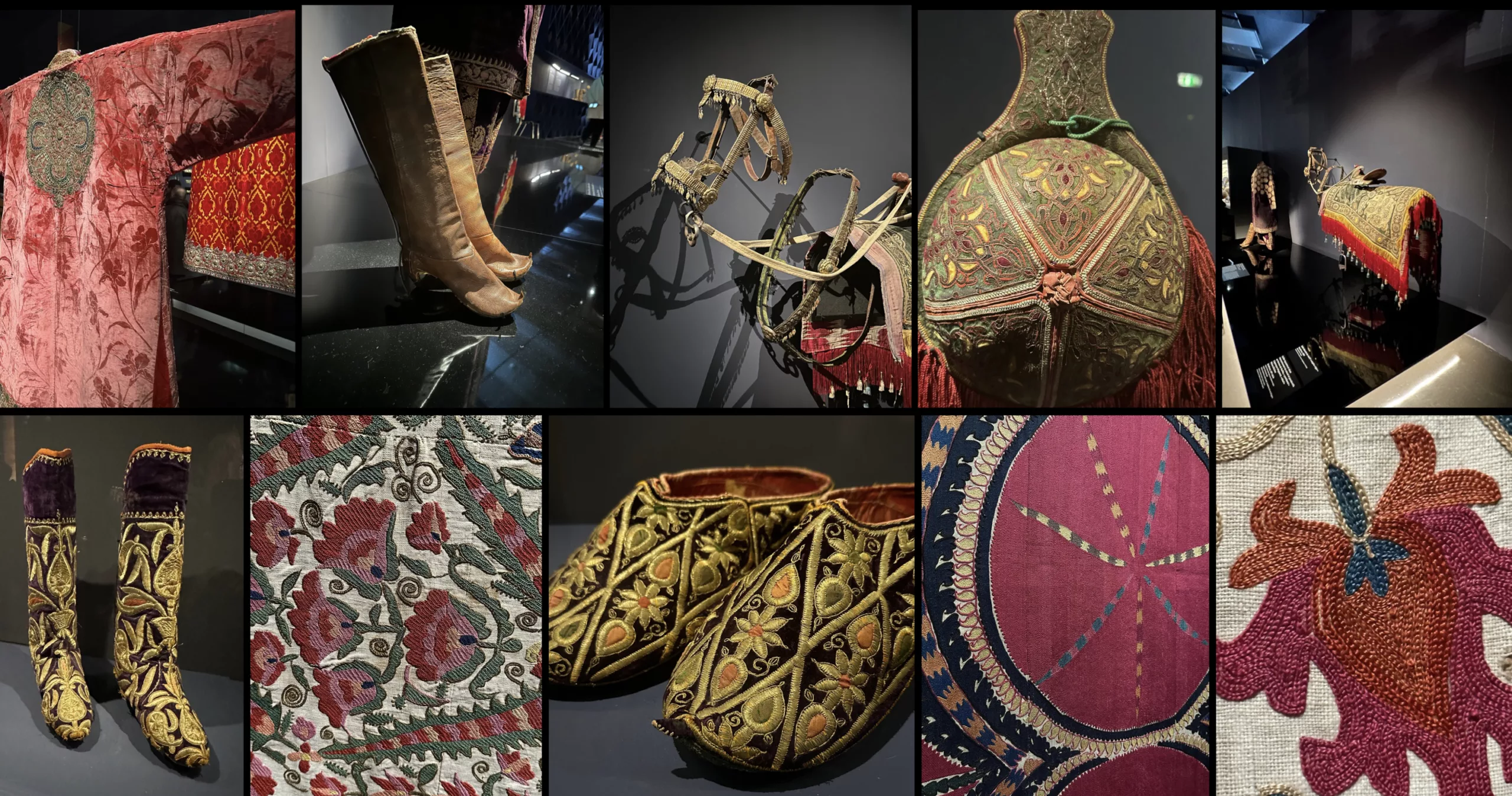
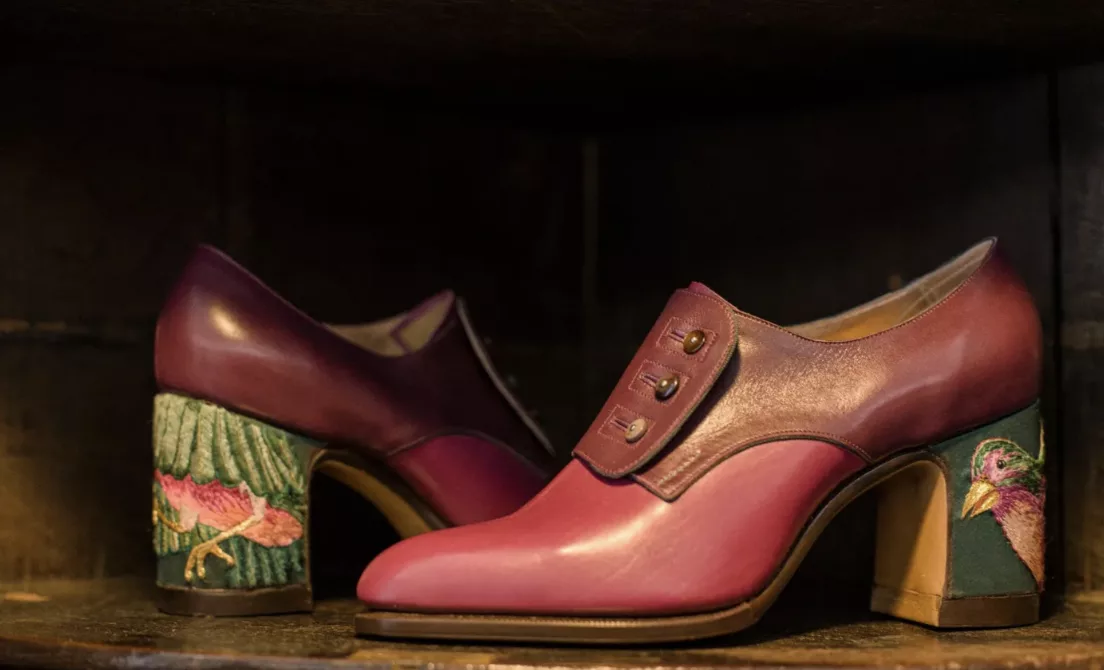
The connection between inspiration and a finished shoe is rarely literal.
I might remember a colour combination, the texture of an old textile, a piece of embroidery or
the way another craftsperson has manipulated a material. These things sit somewhere in the
back of my mind, sometimes for years.
Then the right commission comes along.
That is one of the things I enjoy most about bespoke work. I am not designing towards a
seasonal collection. Each commission begins with an individual, and that gives me the freedom
to draw upon a lifetime of things I have seen, handled, studied and remembered.
The result may bear very little resemblance to the original source of inspiration, and I think that
is exactly as it should be.
After more than thirty years of making shoes, I am still learning how much there is to learn.
Museums, collections and the work of other craftspeople take me outside the familiar world of
shoemaking. They make me think differently about materials I have worked with for decades
and introduce me to techniques, combinations and ideas I might never otherwise encounter.
Not everything I photograph or admire will become a shoe. Most of it won't. But it all becomes
part of the visual vocabulary I have accumulated over the years.
And every now and then, when the right client, material and idea come together, something I
saw years ago finds its place.