The Art of Gilded Leather
An ancient technique, still finding its place in the atelier today.
There is something quite extraordinary about applying gold to leather. Leather is a material I have worked with for more than thirty years, yet I am still fascinated by the number of different traditions, techniques and disciplines that surround it. Some are familiar within shoemaking, while others come from bookbinding, interiors, conservation and the decorative arts.
Looking beyond our own discipline has always been an important part of the way we work.
Leather gilding is a particularly beautiful example.
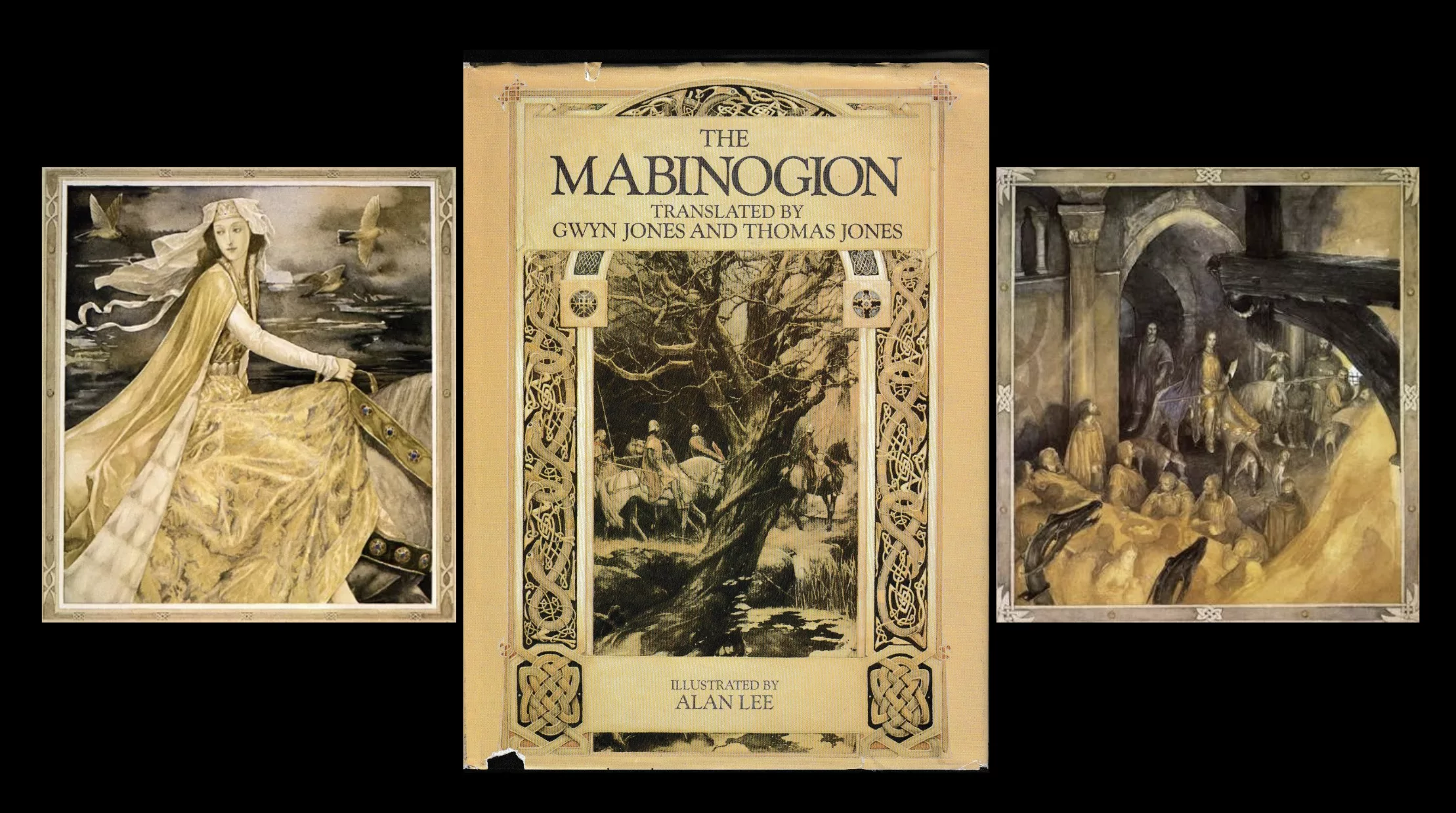
The technique has a remarkably long history, and I was fascinated to discover references to
gilding and leatherwork within The Mabinogion, the collection of medieval Welsh tales.
Gold and other precious metals appear throughout the stories as symbols of status, beauty and
the extraordinary, but what particularly interested me were the references to the craft itself.
In Manawydan fab Llŷr, Manawydan turns his hand to a number of crafts, including leatherwork,
decorating his work with colour and gilding. His craftsmanship is described as so accomplished
that other tradesmen are unable to compete with him.
For me, there is something wonderful about finding these references in such an ancient text.
The desire to transform leather through skill, colour and precious metal has existed for
centuries, yet the same combination of material, judgement and hand skill still has relevance in
our atelier today.
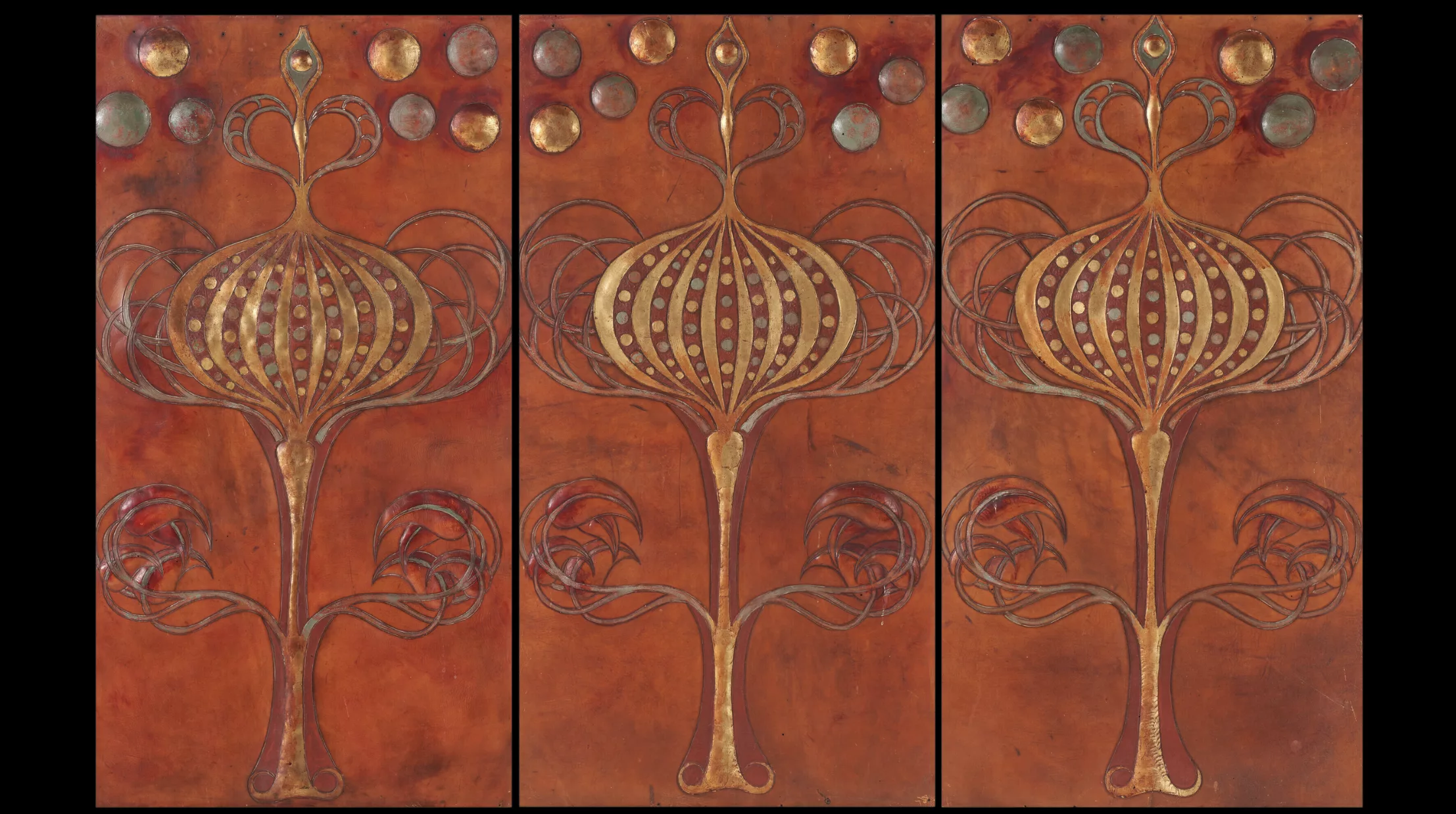
My own interest in gilded leather stretches back many years. A few years ago, at a private view at PAD London, I saw a number of remarkable gilded leather panels by C.R. Ashbee on display in one of the galleries.
Ashbee was one of the leading figures of the British Arts and Crafts movement, and decorative
leatherwork formed part of the extraordinary breadth of work produced by his Guild of
Handicraft.
Seeing those panels in person stayed with me.
There is a richness to gilded leather that is quite unlike anything else. The character of the skin
remains visible beneath the metal, so rather than disguising the material, the gold works with it.
It is an idea that has found its way into our own work over the years.
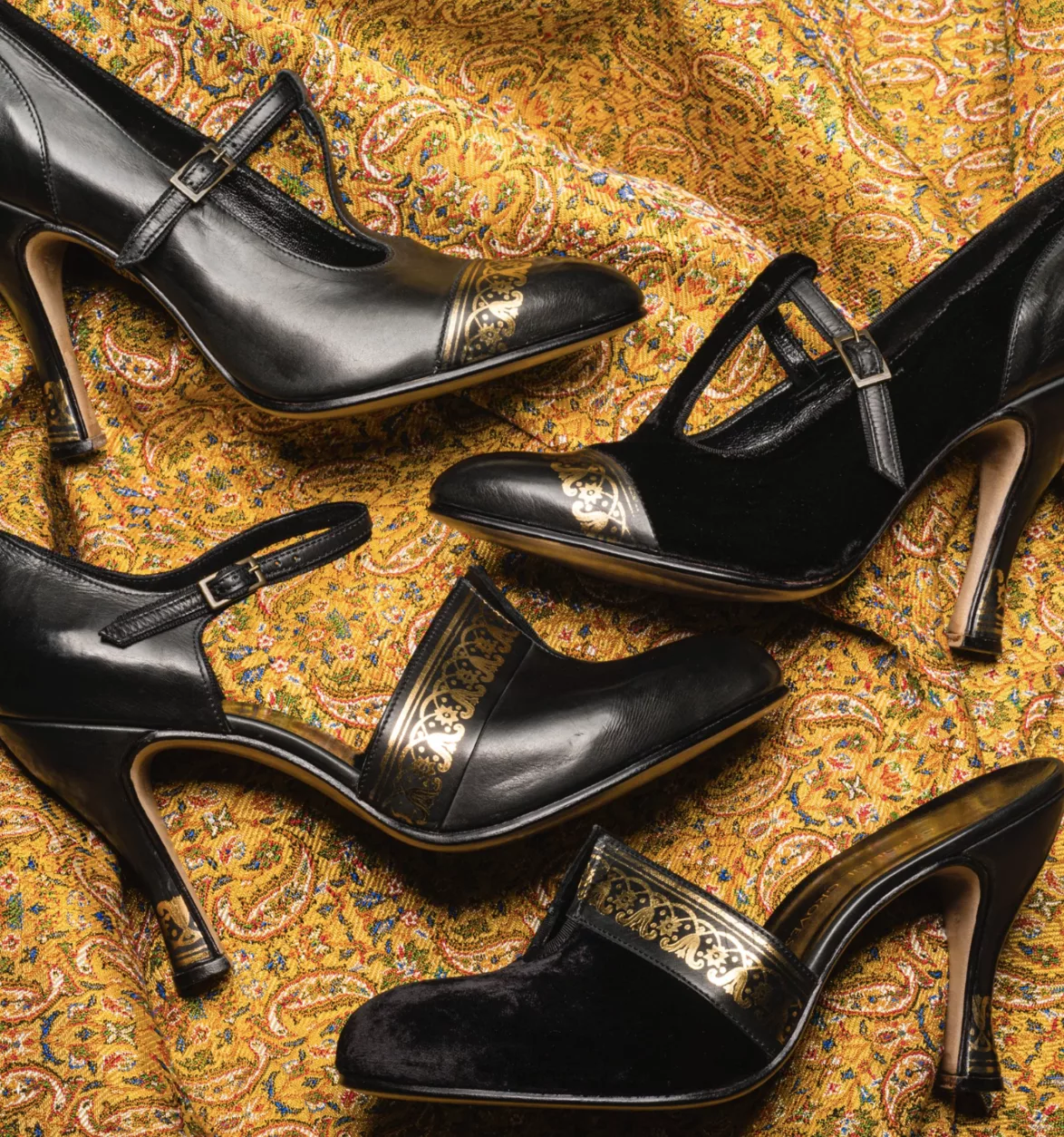
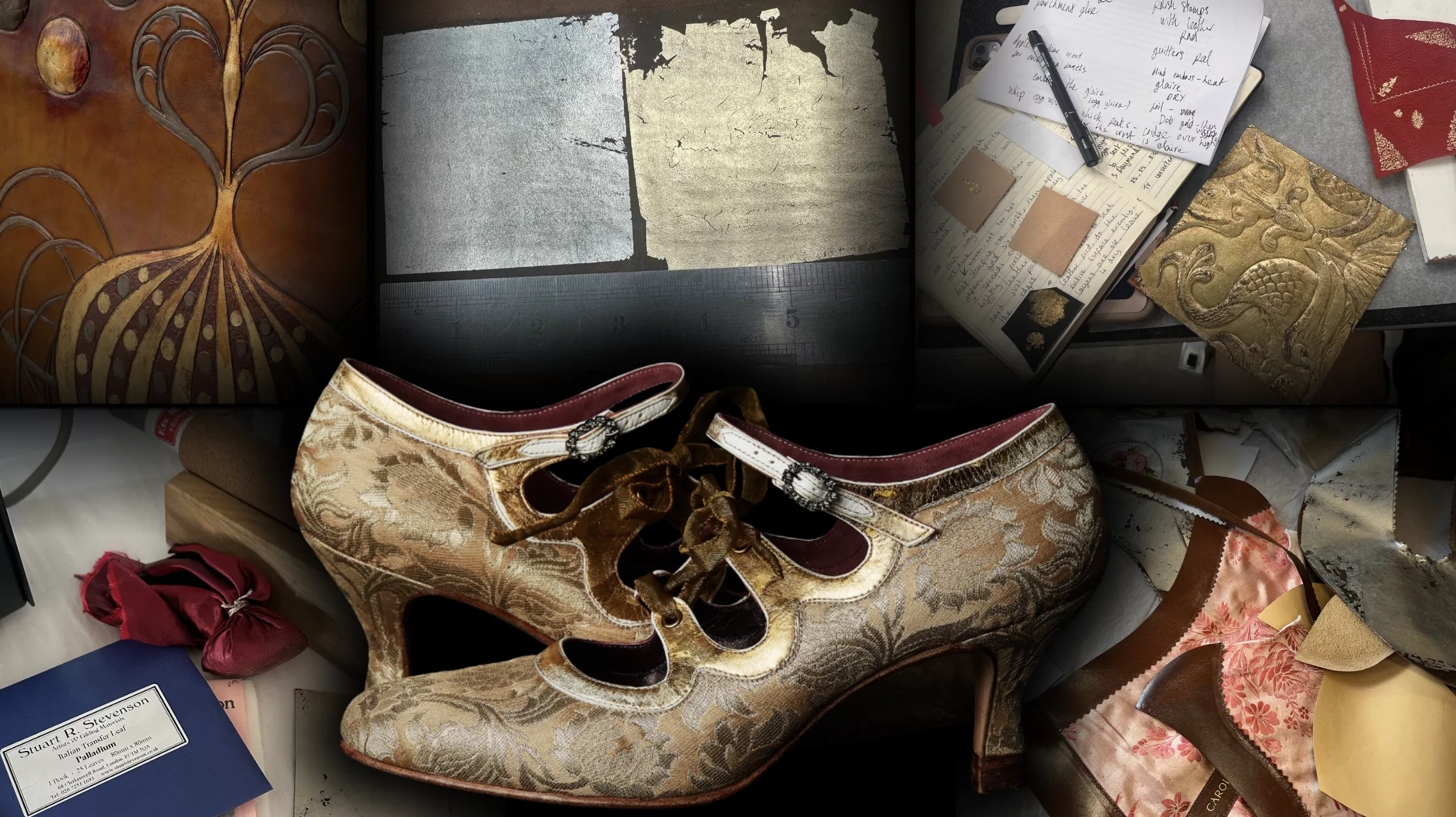
We have employed 22-carat gold leaf and other precious metals, including palladium, in a
number of bespoke commissions. It is a beautiful process, but a temperamental one.
The base leather needs to be right. The dilution of the size, the temperature of the tool and the
pressure applied all affect the result. There is a point at which material, judgement and
experience have to work together.
That unpredictability is also part of its appeal.
On a finished commission, the precious metal can be used very sparingly, sometimes as no
more than a detail that catches the light. It does not need to dominate the design to completely
change its character.
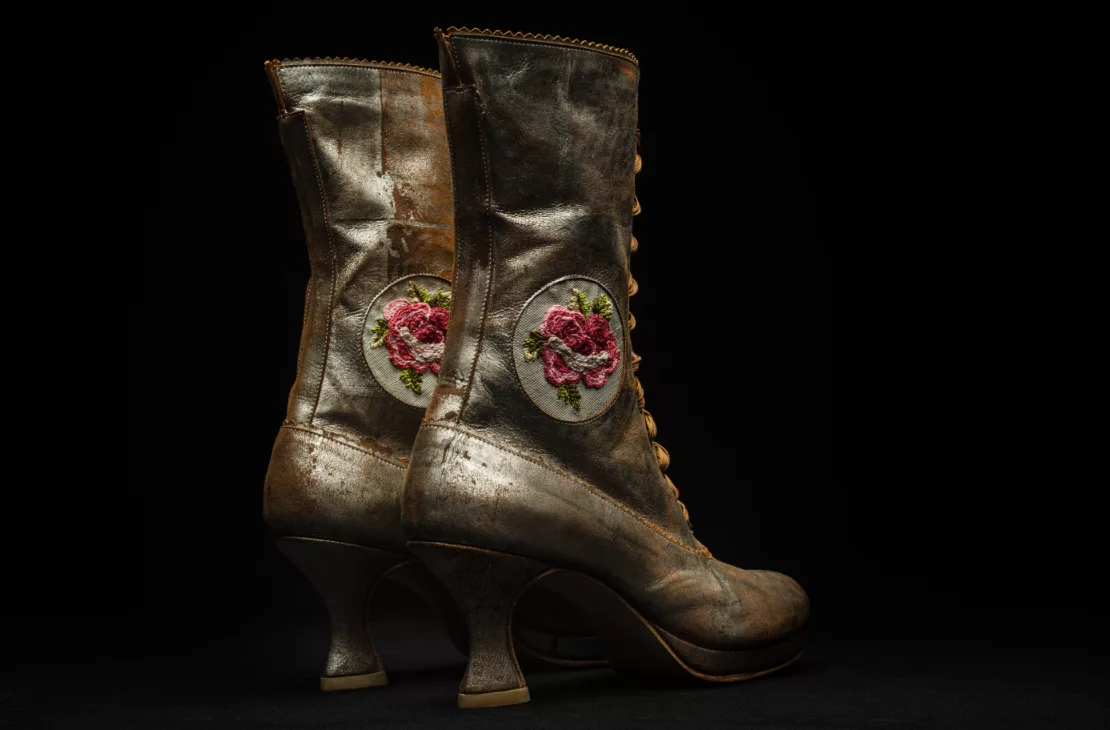
Recently, Lilly attended a specialist leather gilding course at the Leather Conservation Centre,
studying traditional techniques used in the conservation and decoration of leather.
It was an opportunity to look more closely at a technique we have already employed within the
atelier and to deepen our understanding of the materials and processes involved.
I am always keen for us to look beyond the immediate world of shoemaking.
Bookbinders, conservators, saddlers and other specialist leatherworkers all understand and
manipulate the same material in different ways. Every discipline offers another perspective and,
in turn, a greater understanding of what leather is capable of.
Lilly will continue that exploration with further courses in traditional leatherworking disciplines,
including framed bag making and Islamicate bookbinding. They may seem removed from
shoemaking at first, but the knowledge of structure, manipulation, decoration and material
gained through them can all inform our work.
For me, that is an important part of keeping a traditional craft alive.
Preservation does not mean standing still. It means understanding the skills that came before
us, continuing to practise them and finding new ways for that knowledge to inform contemporary
work.
Perhaps that is what I find most interesting about working in a traditional craft.
A reference discovered in medieval Welsh literature, an Arts and Crafts leather panel
encountered at PAD London, knowledge shared by a leather conservator, and a contemporary
bespoke commission can all be connected by the same material and the same curiosity about
what can be achieved with it.
The techniques may be ancient.
What we do with them does not have to be.