Celebrating British Craftsmanship at the Victoria & Albert Museum
There are certain occasions that remind you why traditional craftsmanship continues to matter.
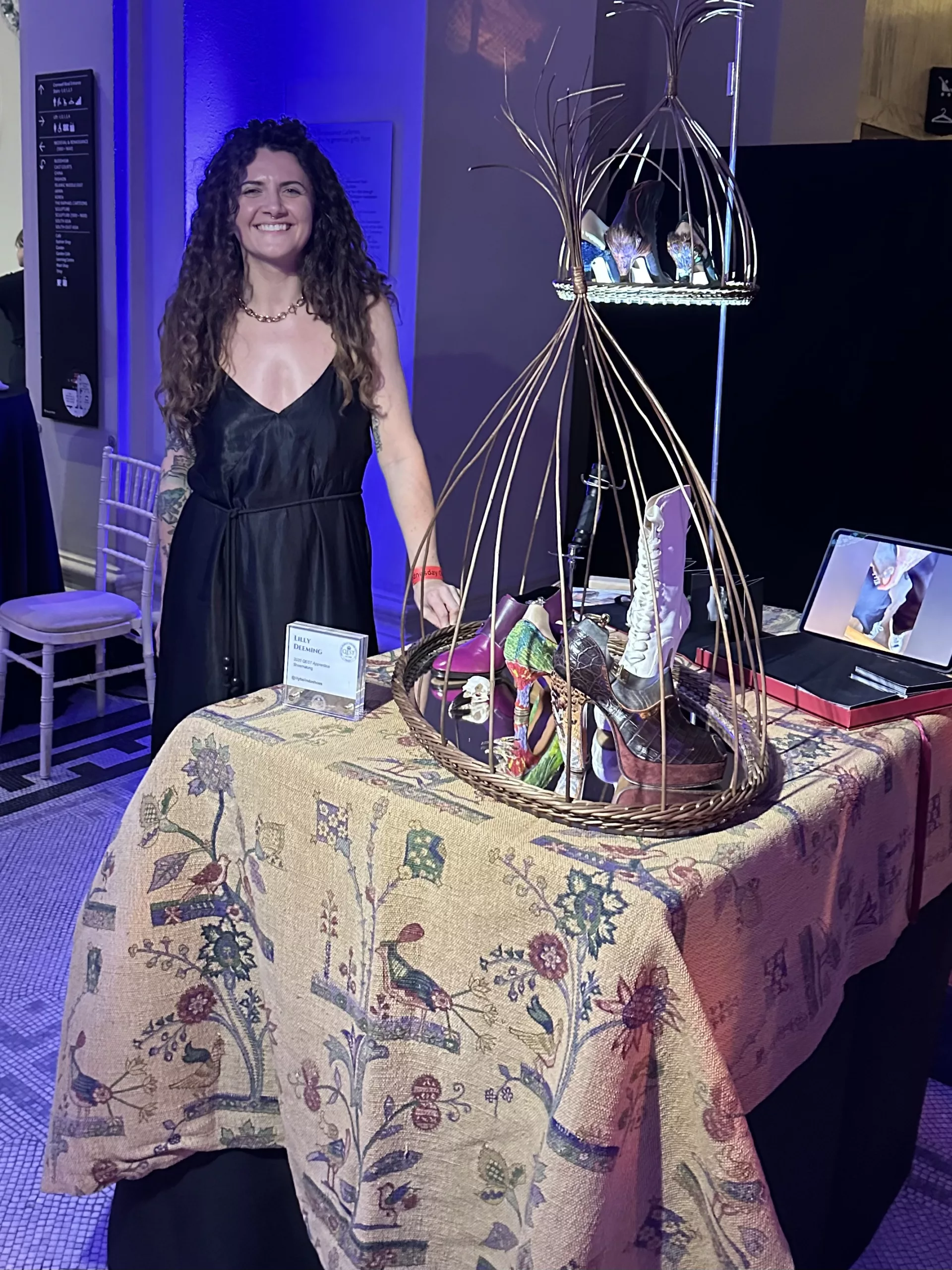
Earlier this year, Lilly and I were honoured to take part in QEST's Ultimate Evening of Craft at
the Victoria and Albert Museum.
Bringing together patrons, sponsors and some of Britain's most accomplished makers, the
evening celebrates the extraordinary breadth of contemporary craft and the people dedicated to
preserving it. For us, it was made even more special by Lilly's own journey with QEST.
Lilly was previously a QEST Apprentice, and the support she received from the charity enabled
me to employ her when she first joined the workshop. To see her return to the event as one of
QEST's ambassadors was a proud moment and a reminder of how important it is to invest in the
next generation of makers.
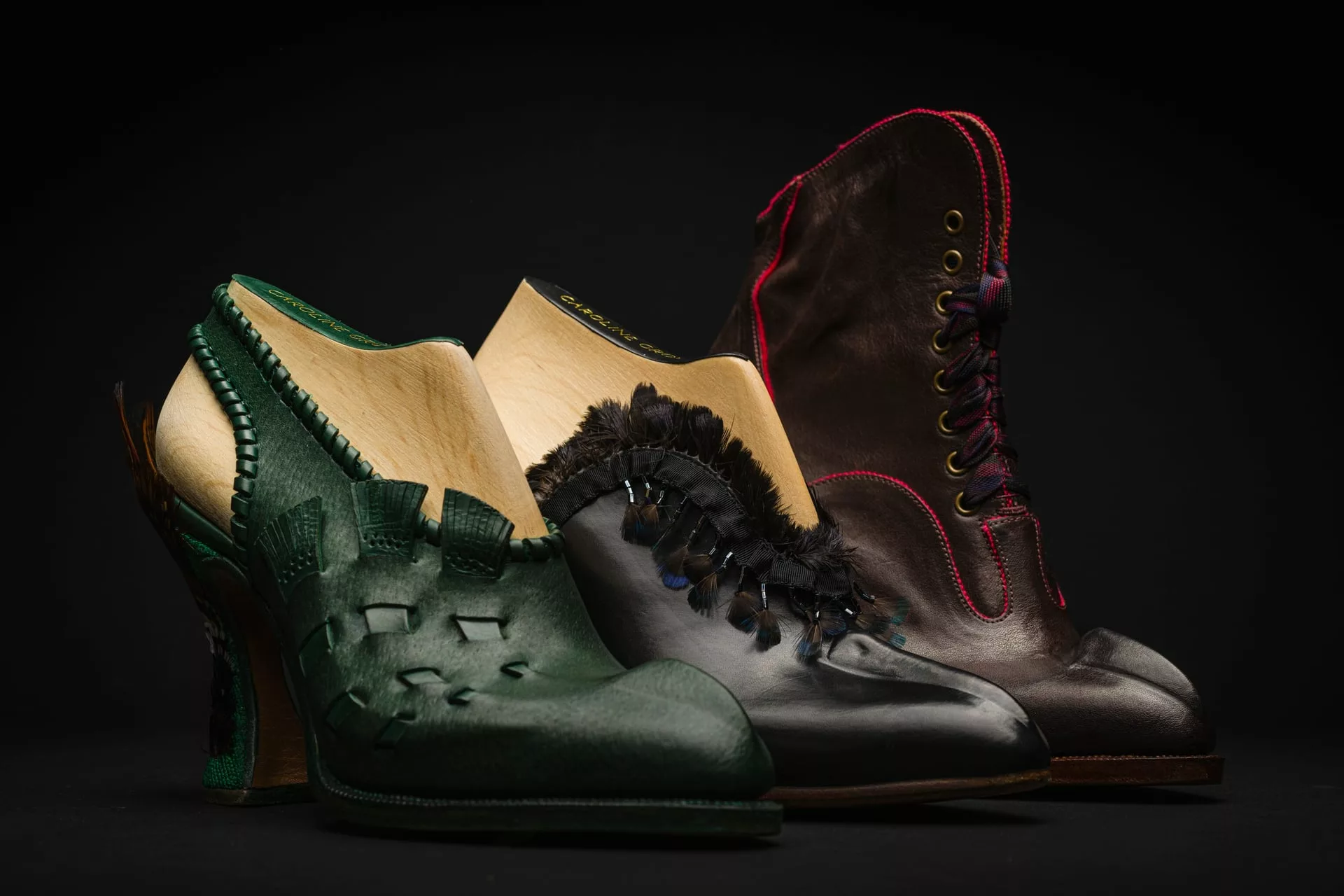
For the exhibition, we created a new collection entitled Flights of Fancy.
Inspired by the beauty, character and individuality of birds, we designed three new sample
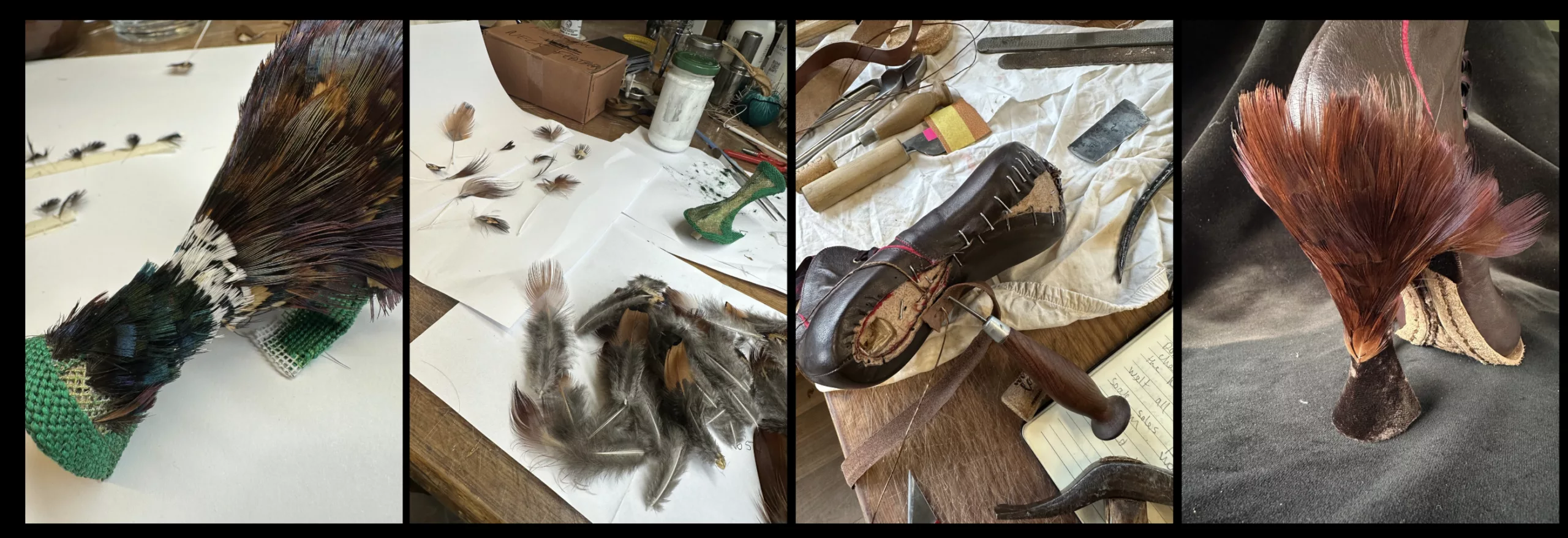
shoes that brought together many of the techniques we use within the atelier. Moulded leather
beaks, featherwork, hand embroidery and traditional shoemaking combined to create a playful
yet highly skilled collection celebrating the natural world.
Alongside these new pieces, several longstanding clients very kindly loaned us bird-inspired
commissions from their own collections. Seeing shoes that had returned from homes around the
world to be exhibited together was incredibly special, reflecting the lasting relationships that
often develop through bespoke commissions.
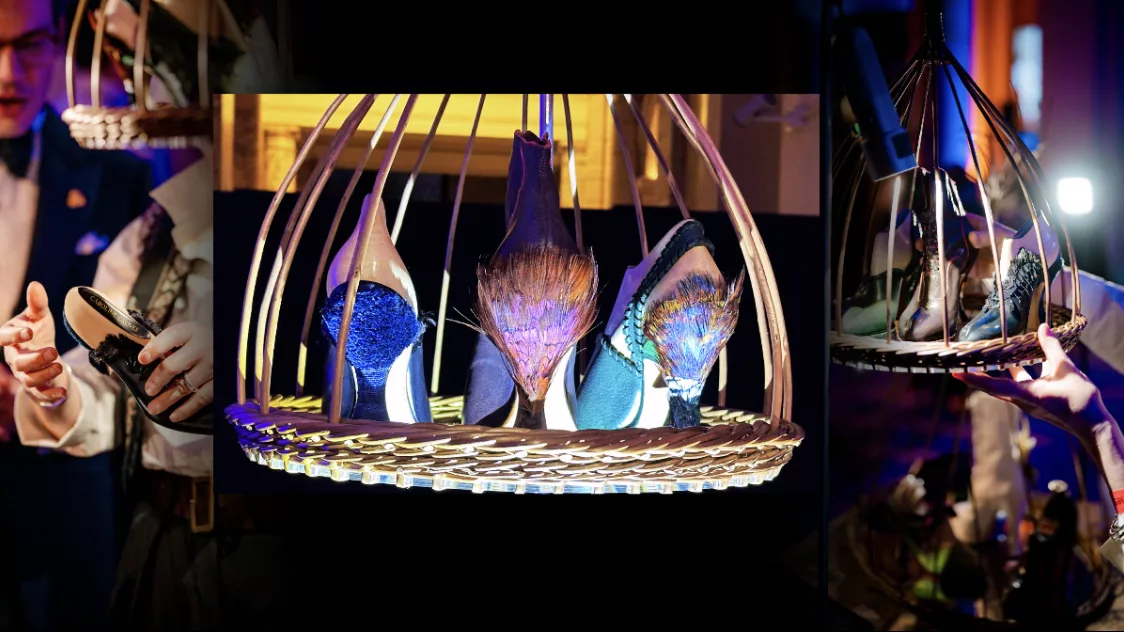
To display the collection, we commissioned two willow cloches inspired by traditional bird cages
from the renowned basket maker and willow grower, Jenny Crisp. Her beautifully crafted work
provided the perfect setting for the collection, complementing the craftsmanship of each piece
while echoing the spirit of Flights of Fancy.
Some of the pheasant feathers used within the collection were generously supplied by the
Trafalgar Estate, adding another authentic connection to the British countryside that first
inspired the designs.
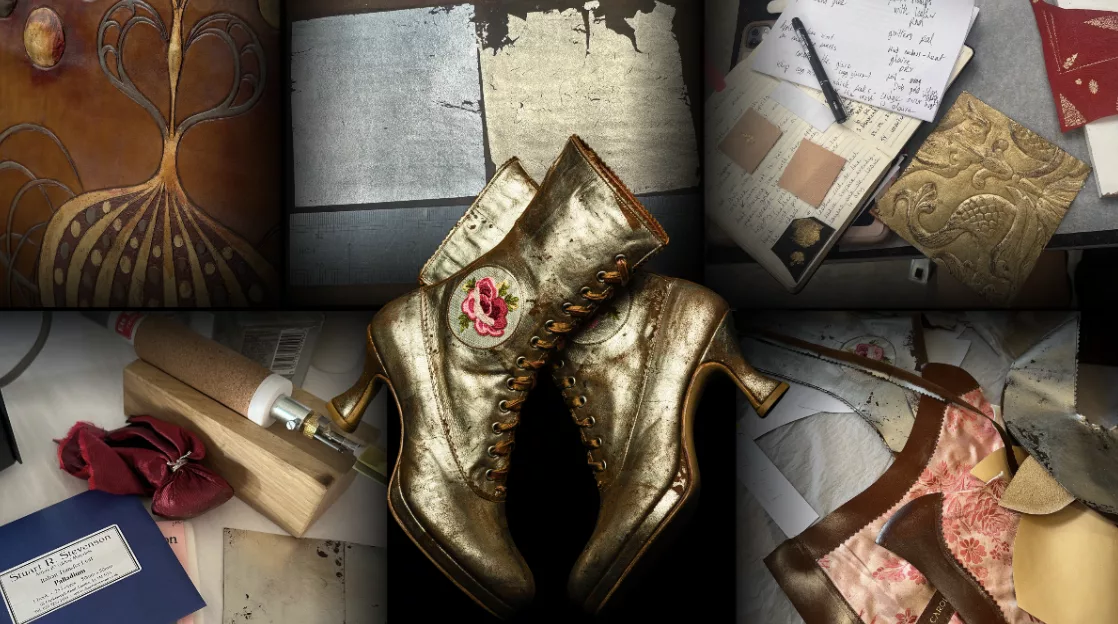
Back in the workshop, that commitment to learning continues. Recently, Lilly attended a
specialist leather gilding course at the Leather Conservation Centre, studying traditional
techniques used in the conservation and decoration of leather. It was a wonderful opportunity to
deepen our understanding of a craft that has been practised for centuries.
My own interest in leather gilding stretches back many years. I vividly remember seeing Charles
Robert Ashbee's remarkable gilded leather panels on display at PAD London, one of the world's
leading fairs for art and design. Seeing these extraordinary works in person reinforced just how
timeless these traditional techniques remain, and why they continue to inspire makers today.
Although our work is very different in scale, we have incorporated 22-carat gold leaf and other
precious metals, including palladium, into a number of bespoke commissions over the years.
Like so many traditional techniques, leather gilding requires patience, precision and an
understanding of the material itself, qualities that continue to influence the way we approach
every commission.
Investing in these skills is every bit as important as preserving them. Whether studying leather
gilding, bookbinding or other traditional leatherworking disciplines, every new technique
deepens our understanding of the material and informs the way we approach bespoke
shoemaking. Learning never really stops.
Thank you, as always, for following my work and sharing my passion for bespoke shoemaking
and craftsmanship.